
Earning Florida Bright Futures takes more than hitting the GPA, test score, and service hour benchmarks. The scholarship only counts once you submit the right application, on time, with everything Florida needs to verify your eligibility.
General·8 min read
Bright Futures Application: Step-by-Step Guide for Florida Students
How to apply for Florida Bright Futures: FFAA setup, application steps, August 31 deadline, FAFSA rules, and tips to avoid common mistakes.
Larry Learns
Updated 
Meet Larry
Turn SAT & ACT Prep Into a Game
Take a free diagnostic, discover your score, and improve through bite-sized daily challenges.
- Discover your score in 2 minutes
- 25,000+ SAT & ACT practice questions
- Daily streaks, goals & leaderboards
Start Free Diagnostic
No credit card requiredTakes 2 minutes

Your estimated SAT
1240Goal: 1400
4001600
Free 2-minute diagnostic
How the Bright Futures application works
Bright Futures is not automatic. Even if you nail the 3.5 weighted GPA, the 29 ACT, and the 75 service hours, you still have to actually apply through the Florida Financial Aid Application (FFAA). The FFAA is the single application that covers every Bright Futures award level (FAS, FMS, and GSVS), and Florida uses it to evaluate your eligibility against your transcript and test scores. This guide walks you through the application step by step with the exact timeline that works for most Florida high school students.
Need to confirm whether you meet the underlying requirements first? Check our 2026 Bright Futures requirements guide or take a free SAT or ACT quiz to benchmark your current scores.
What you need before you apply
Before you open the FFAA, gather these:
- Your Social Security number (or an Alien Registration number if you are an eligible non-citizen)
- Your high school's six-digit Florida high school code (your guidance office has this, or you can look it up on the FFAA portal)
- A working email address you check regularly. Bright Futures correspondence flows through this email after submission
- Your expected high school graduation date
- Your demographic and residency information, including how long you have lived in Florida
You do not need to submit test scores or transcripts as part of the FFAA. Your high school sends those directly to the state after you graduate. You also do not need a FAFSA confirmation to apply for Bright Futures, although submitting the FAFSA separately is recommended to qualify for other federal and state aid.
Loading practice questions...
Step 1: Create your FFAA account
Go to the Florida Student Scholarship and Grant Programs portal and click the link for the Florida Financial Aid Application. You will be asked to create an account with your name, email, and date of birth. Choose an email address you will still have access to after high school graduation, because award notifications and renewal reminders will go there for the next four to six years.
After registering, you receive a unique applicant ID. Write this down or save it in your phone. You need it to log back in, check your status, and update your information later.
Step 2: Fill out the FFAA
The application itself is short, about 10 to 15 minutes for most students. The required fields:
- Demographic information (name, address, date of birth, gender)
- Florida residency information (how long you have lived in Florida, parent or guardian residency status)
- High school information (your six-digit Florida high school code and expected graduation date)
- Citizenship status
- Legal acknowledgments (Florida requires applicants to attest they are not in default on a federal loan and have no felony convictions in adult court, with some narrow exceptions)
If you have lived in Florida for less than 12 months before applying, residency review is more involved. The state may request supporting documents from a parent or guardian, including utility bills, voter registration, or tax filings. Plan ahead if your move to Florida is recent.
Step 3: Submit before August 31 after graduation
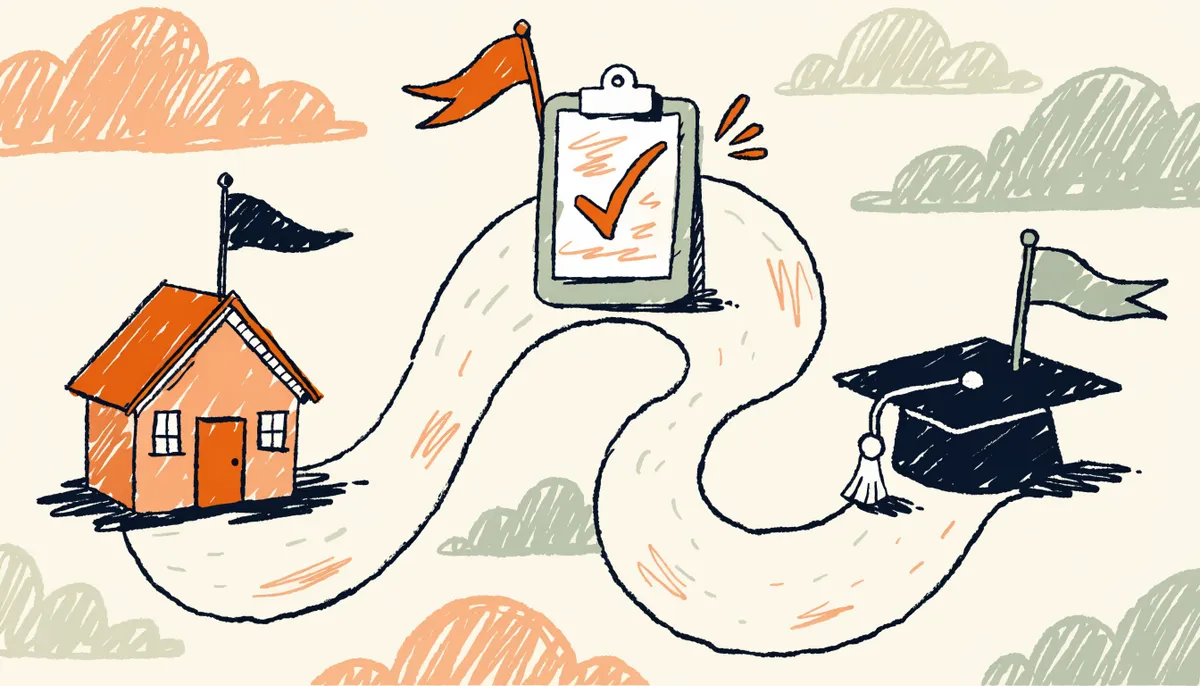
The FFAA opens October 1 of your senior year and closes August 31 after high school graduation. That is a 10-month window, which feels generous until you realize most students submit between February and June. The earlier you submit, the smoother the process, because your high school then has a clear window to upload your transcript and test scores before the state evaluates you.
If you miss the August 31 deadline by even one day, you lose Bright Futures for that year entirely. There are no late submissions and no appeals for missing the deadline. This is the single most common reason eligible students lose Bright Futures: they hit every academic requirement, then forget to actually apply.
Step 4: Have your high school submit your transcript and test scores
Your high school is responsible for sending your final transcript and qualifying test scores to the state. The UF Office of Student Financial Aid has a useful overview of what documentation Florida universities expect to receive. Most Florida high schools do this automatically in spring of your senior year for all students who have submitted an FFAA. Confirm with your guidance counselor that:
- Your transcript has been transmitted to the Florida Department of Education
- Your SAT, ACT, or CLT scores from College Board, ACT.org, or CLT have been sent directly to the state's score recipient code
- Your community service hours have been recorded on your transcript
Service hours not on your transcript will not count, even if you have them documented elsewhere. Get this resolved before you graduate.
Step 5: Wait for the eligibility evaluation
After you submit the FFAA and your high school submits your supporting documents, the state evaluates your eligibility. The first evaluation usually happens by late spring, with a final evaluation in late summer once all senior-year grades and final test scores are in. You can check your evaluation status anytime by logging into the FFAA portal with your applicant ID.
Possible evaluation outcomes:
- FAS eligible: you qualify for Florida Academic Scholars (100% of tuition at eligible public institutions)
- FMS eligible: you qualify for Florida Medallion Scholars (75% of tuition)
- GSVS eligible: you qualify for the career and technical pathway
- Ineligible: you fell short of one or more requirements. The portal lists which one(s)
- Pending: some documents are still missing, or there is a residency review in progress
If you are marked ineligible because of a missing document, fix it before August 31. If you are marked ineligible because you fell short of a requirement, your only options are to retake the test (if you have time) or appeal in narrow circumstances such as a documented disability that affected test performance.

Step 6: Receive the award at your Florida college
Once you enroll full-time at an eligible Florida postsecondary institution, your Bright Futures award disburses automatically through the financial aid office. You do not need to do anything extra to claim it. The award appears as a credit on your tuition bill at the start of each semester, reducing your balance directly.
You can use Bright Futures at:
- Florida public universities (the 12 SUS institutions)
- Florida College System institutions (state colleges and community colleges)
- Eligible Florida private universities and colleges (at a fixed lower flat rate than the public university rate)
You cannot use Bright Futures at any out-of-state school. The award is designed to keep Florida graduates studying in Florida.
About FAFSA and Bright Futures
One of the most common questions is whether you need to submit the Free Application for Federal Student Aid (FAFSA) to receive Bright Futures. The short answer: no, the FAFSA is not required for Bright Futures eligibility. The FFAA is a separate state application.
That said, you should submit the FAFSA anyway for two reasons:
- It unlocks federal aid (Pell Grant, federal student loans, work-study programs) through the U.S. Department of Education
- It unlocks additional Florida state aid you may qualify for separately, including need-based grants and institutional aid
The FAFSA typically opens October 1 each year for the upcoming aid year (the 2026-27 FAFSA launched on schedule in October 2025). Submit both the FAFSA and the FFAA early in your senior year and you will have every form of aid you qualify for lined up before you start college.
Application timeline summary
Common application mistakes
- Missing the August 31 deadline. The single most common reason eligible students lose Bright Futures. Set a calendar reminder for early August at the latest.
- Service hours not on the transcript. Confirm with your guidance counselor that your hours are recorded in your official school transcript before graduation. Hours documented only on personal forms do not count.
- Test scores not sent to Florida directly. Self-reporting your SAT or ACT score on the FFAA is not enough. The score has to come from College Board, ACT.org, or CLT directly to the state's recipient code.
- Wrong email address. Use an email you will still check after high school graduation. School-issued email addresses often disable after you graduate, locking you out of your FFAA account.
- Submitting before checking your transcript. Errors in transcripts can disqualify you. Pull your unofficial transcript through your guidance office once in junior year and again in senior year to catch missing course credits, wrong grades, or missing service hours.
Related resources
- Bright Futures Scholarship: complete guide to requirements and benefits
- Florida Bright Futures: full guide for students and parents
- Bright Futures requirements 2026: GPA, test scores, and service hours
- Bright Futures SAT score requirements
- Bright Futures ACT score requirements
- SAT prep hub and ACT prep hub
- Free SAT and ACT score calculator
Frequently Asked Questions About the Bright Futures Application
How do I apply for Bright Futures?
Submit the Florida Financial Aid Application (FFAA) at the Florida Department of Education's Bright Futures portal. The FFAA is the single application that covers all three Bright Futures award levels. You submit one application and Florida automatically evaluates you for the highest tier you qualify for. The application takes about 10 to 15 minutes once you have your Social Security number, high school code, and basic demographic information ready.
What is the Bright Futures application deadline?
August 31 after your high school graduation. The FFAA opens October 1 of your senior year, giving you a 10-month window to submit. The state strongly recommends submitting early in your senior year (by January or February) so your high school has time to send your transcript and test scores before the final deadline.
Do I need to submit the FAFSA to get Bright Futures?
No. The FAFSA is not required for Bright Futures eligibility. Submitting the FAFSA is still recommended because it unlocks federal aid (Pell Grant, federal loans, work-study) and additional Florida need-based grants, but it has no effect on your Bright Futures eligibility itself.
What happens if I miss the August 31 deadline?
You lose Bright Futures for that academic year. There are no late submissions, no appeals for missed deadlines, and no second chances. The deadline is firm. If you miss it, you may still apply for renewal in a future year if you meet certain conditions, but you will not receive funding for your freshman year.
Can I apply for Bright Futures if I am homeschooled?
Yes. Homeschool students apply through the FFAA the same way public and private school students do, but you must be registered with the Florida Department of Education as a homeschool student for at least one full academic year before high school graduation. Documentation requirements are more involved, so plan ahead with your district homeschool coordinator.
What if I miss a test score or service hour requirement by a small margin?
There is no rounding up. The thresholds are firm. Your options are to retake the test before the August 31 deadline (most testing dates have score reports available within 4-6 weeks) or accept the lower award tier you qualify for. Most students who narrowly miss FAS still qualify for FMS, which covers 75% of tuition at eligible Florida public institutions.
Can I update my FFAA after submitting it?
Yes. You can log back into the FFAA portal with your applicant ID and update most information, including your address, expected graduation date, and college choice. Changes to your demographic or residency information may trigger an additional review. Update early if you know your information has changed.
Where can I check my Bright Futures application status?
Log into the FFAA portal with your applicant ID. The portal shows whether your application has been received, which documents are still missing (if any), and your current eligibility evaluation. Check it monthly during senior spring and weekly in July and August to catch any last-minute issues.
#bright futures#florida#scholarships#college admissions#application


Ready to test your knowledge?
Put what you've learned into practice with our intelligent quiz system.