
Last Updated: April 1, 2026
General·13 min read
How SAT is Scored in 2026: Complete Breakdown Explained
The SAT uses a straightforward scoring system that might seem intimidating at first, but it's actually quite logical once you understand the basics. Your total.
Larry Learns Team
Updated 
Meet Larry
Turn SAT & ACT Prep Into a Game
Take a free diagnostic, discover your score, and improve through bite-sized daily challenges.
- Discover your score in 2 minutes
- 25,000+ SAT & ACT practice questions
- Daily streaks, goals & leaderboards
Start Free Diagnostic
No credit card requiredTakes 2 minutes

Your estimated SAT
1240Goal: 1400
4001600
Free 2-minute diagnostic
Key Takeaways
- SAT scored on 400-1600 scale: two sections (Reading & Writing, Math) worth 200-800 each
- Raw scores (correct answers) convert to scaled scores using equating, accounting for question difficulty
- Digital SAT uses adaptive testing: Module 2 difficulty depends on your Module 1 performance
- Two students with same correct answers can earn different scores based on question difficulty levels
- National average is around 1050; 1200+ is above average; 1470+ competitive for top universities
What Is the SAT Scoring Scale?
The SAT uses a straightforward scoring system that might seem intimidating at first, but it's actually quite logical once you understand the basics. Your total SAT score ranges from 400 to 1600, with two equally weighted sections: Reading & Writing and Math. Each section is scored on its own 200-800 scale, meaning your Reading & Writing score and Math score are added together to create your final total.
Here's what makes this structure reassuring: even if you answered every single question incorrectly, you'd still receive a base score of 400. This floor ensures that attempting the test carries no penalty, which takes pressure off and lets you focus on doing your best rather than worrying about catastrophic outcomes.

One key point: the scoring scale remained unchanged with the digital SAT format, meaning whether you took the test in 2024 or are taking it in 2026, the 400-1600 structure stays consistent. This stability matters because it means all your preparation materials and score comparisons remain relevant. Understanding this foundation helps you interpret your results and set realistic goals for improvement.
Loading practice questions...
From Raw Scores to Scaled Scores: The Conversion Process
Let's start with the fundamentals. Your raw score is simply the number of questions you answer correctly. Nothing more, nothing less. On the Digital SAT, you'll encounter 54 Reading and Writing questions across two modules and 44 Math questions across two modules. For every question answered correctly, you receive one point with no penalty for guessing. This means there's zero downside to attempting every question, even if you're unsure of the answer.
So if you get 48 Reading and Writing questions correct and 35 Math questions correct, your raw score is 83 points. Straightforward, right? But here's where it gets interesting: that raw score of 83 doesn't directly translate to your final score.
The College Board converts your raw score into a scaled score ranging from 200 to 800 using a process called equating. This is the critical step that often confuses students, but understanding it actually builds confidence in the system's fairness.
Here's why equating matters. Not every version of the SAT is equally difficult. One administration might include slightly trickier Reading passages while another focuses on more challenging Math concepts. Without adjustment, students taking the harder version would be unfairly penalized. Equating solves this problem. The College Board analyzes performance data from each test administration and creates a conversion table specific to that test date. This ensures that a scaled score of 700 means the same thing regardless of which test date you took.
Think of it this way: equating is the system's way of keeping score across different SAT versions comparable. The equating process ensures that different forms of the test do not affect your score, making comparisons among test takers possible. Your raw score becomes your scaled score through this carefully calibrated conversion, ultimately producing the 200-800 number colleges see on your application.
How Adaptive Testing Changes Your Score
The digital SAT's adaptive design fundamentally changes how your performance translates into a score. Here's what you need to know: each section splits into two modules of equal length, and your performance on Module 1 directly determines which questions you'll face in Module 2.
Your first module presents a balanced mix of easy, medium, and hard questions. This isn't random; it's calibrated to find your skill level quickly. If you perform well on Module 1, you advance to a more challenging Module 2 where the questions carry higher point values. Conversely, a lower performance on Module 1 means Module 2 will be more accessible, with correspondingly lower point values per question.
Here's the crucial part that changes everything: two students who answer the exact same number of questions correctly may earn different section scores based on question difficulty. Two students who answer the same number of questions correctly may earn differing section scores based on the difficulty of the particular questions they answered. This is intentional and fair. The scoring algorithm now accounts for question difficulty, not just right versus wrong counts.

This system actually protects you. Getting a difficult question wrong carries less penalty than missing an easy one, because the algorithm recognizes the difference in complexity. You're being evaluated fairly based on your actual skill level, not penalized for attempting challenging material. The adaptive structure means your test experience is personalized; you're not struggling through questions far beyond your current abilities or breezing through ones that don't measure your true potential.
Understanding this adaptive mechanism removes mystery from your score. You're not working against some opaque system; you're working within one designed to accurately measure what you know.
Understanding Percentiles and What Your Score Means
Your SAT score becomes most meaningful when you understand it relative to other test takers. That's where percentiles come in. A percentile tells you what percentage of students scored at or below your score. If you're in the 75th percentile, you scored higher than roughly 75% of test takers. It's the context that transforms a number into insight.
According to 2024 data, the national average SAT score hovers around 1024, placing the typical test taker right at the 50th percentile. This matters because it gives you a baseline. Scoring 1050 means you're slightly above average, which is solid. But here's what really matters for college admissions: a score of 1200 places you around the 75th percentile, meaning you've outperformed three-quarters of test takers. That's the kind of score that opens doors at selective schools.
Want to join the top tier? A 1360 or higher puts you in the top 10% of test takers. These scores signal college-level readiness and competitive academic strength.
Here's the crucial distinction: colleges care about "user percentiles," which compare you to actual SAT test takers, rather than "nationally representative percentiles," which attempt to include all high school students regardless of whether they took the SAT. User percentiles matter for admissions because they reflect your standing among peers who are also applying to college.
Don't obsess over a single percentile point. Instead, use percentiles to understand whether your score positions you competitively for your target schools. Research the middle 50% score range for admitted students at colleges you're considering. Your percentile helps you evaluate whether you're in the ballpark or if additional prep makes sense.
The Role of Question Difficulty in Your Final Score
Here's what makes the digital SAT's scoring system fundamentally different from what many students expect: not all correct answers are created equal, and not all wrong answers hurt equally.
The College Board uses Item Response Theory (IRT) methodology to measure your knowledge with precision. Rather than simply counting correct versus incorrect responses, IRT considers the difficulty level of each question you encounter. This matters because the algorithm recognizes something crucial: missing an easy question reveals a bigger gap in your knowledge than missing a hard one.
Think about it logically. If you answer a straightforward algebra problem incorrectly, that suggests you're missing foundational skills. But if you tackle a complex multi-step problem and get it wrong, the algorithm accounts for the fact that even strong test-takers sometimes struggle with the hardest material. The scoring model considers characteristics of questions answered right or wrong including difficulty levels and probability that answer patterns suggest guessing.
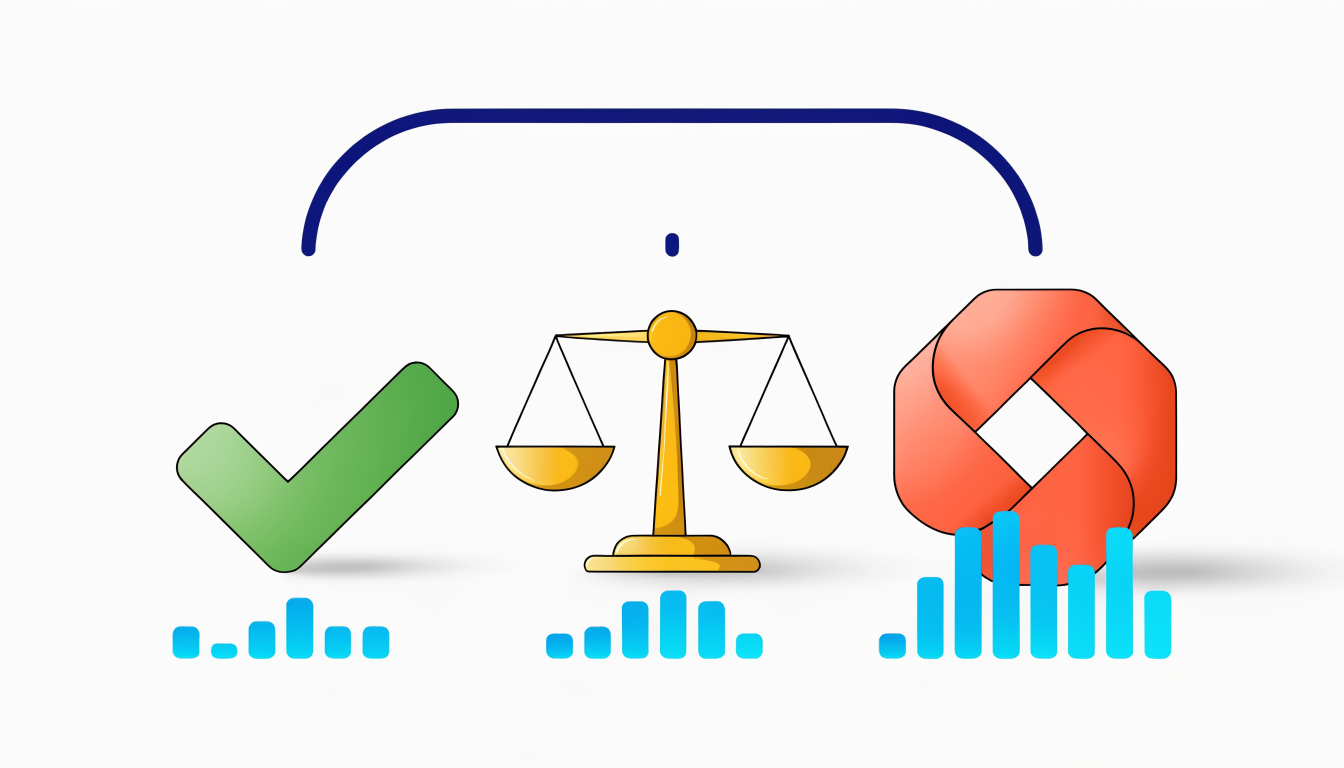
This adaptive weighting system allows the College Board to deliver accurate scores using fewer total questions than paper tests required. The algorithm also factors in guessing probability patterns, meaning it distinguishes between educated attempts and random selections. For you, this means strategy matters: attempting difficult questions carries less scoring risk than you might assume, while maintaining accuracy on foundational content is non-negotiable.
What Counts as a Good SAT Score for Your Goals
Here's the reality: what counts as a "good" SAT score depends entirely on where you want to go and what you want to study. A score that gets you into your state school might not cut it for an Ivy League acceptance, and that's perfectly fine. The key is knowing your specific targets and scoring accordingly.
If you're aiming for most public universities and solid merit scholarship consideration, a score between 1280 and 1350 places you among the top 10-15% of test-takers. This range opens doors at competitive state schools and many private institutions. For the UC system and other flagship public universities, especially in competitive majors, 1400 or higher puts you in a strong position. You're looking at genuine scholarship opportunities and priority consideration.
The competitive landscape shifts dramatically at highly selective schools. For top 20 universities including Ivy League institutions, you're targeting a range of 1470 to 1580. These aren't hard cutoffs, but they reflect what admitted students typically score.
Rather than fixating on one magic number, research the middle 50 percent SAT range for your target schools. This tells you where admitted students actually land. If your score falls below that range, you're not automatically rejected, but you'll need other strengths. If you're above it, you're in good shape.
The bottom line: set your target based on your actual college list, not on what sounds impressive. A 1200 might be excellent for your goals, while a 1450 might be necessary for someone else's. Your "good" score is the one that gets you into schools where you genuinely want to study.
Frequently Asked Questions About SAT Scoring
Can you get a perfect 1600 if you miss a few questions?
Yes, absolutely. The Digital SAT uses adaptive testing, which means the difficulty of your second module adjusts based on your first module performance. If you're in the harder second module, you can miss one or two questions and still achieve a perfect score. This is by design, not a loophole. The scoring algorithm accounts for question difficulty, so harder questions are weighted accordingly.
How quickly will I get my scores?
The College Board typically returns test scores within 2-3 weeks of your test date, though many students see scores available sooner, sometimes within days. You'll receive an email notification when scores are ready, and you can view them in your College Board account. This timeline is consistent across all test dates.
What if I take the SAT multiple times?
Most colleges accept superscores, meaning they review your best section scores from different test dates, even if they came from separate administrations. So if you scored 780 in Evidence and Reading on your first attempt and 790 in Math on your second attempt, colleges will typically consider your 1570 superscore. Always verify each college's specific policy, but superscoring is increasingly the norm rather than the exception.
Are digital and paper SAT scores comparable?
Completely. Scores from the digital SAT are directly comparable to scores from the paper and pencil version. College Board established an equating process to ensure this equivalence. A 1450 on the digital SAT represents the same achievement level as a 1450 on the paper SAT. You don't need to worry about one format being "easier" or "harder" than the other.
Why is the minimum score 400, not zero?
The 400 minimum reflects how the scoring scale is constructed. It's not free points; rather, it's where the scale mathematically begins. Even if you left every question blank, the algorithm would still assign a score based on the test structure. This is standard practice for standardized tests.
Should I guess if I don't know an answer?
Always answer every question. There's no guessing penalty on the Digital SAT, so leaving questions blank only hurts you. Even an educated guess gives you a shot at points.
How to Use Your SAT Score for College Success
Your SAT score is a starting point, not a finish line. The moment you receive your results, you have concrete data to guide your next moves. Start by examining your subscores and cross-test scores; these reveal exactly where you struggled. If you stumbled on algebra but excelled in reading, you know precisely where to focus your energy. This targeted approach beats generic prep every time.
Next, research your target colleges. Many colleges publish the middle 50% SAT range of their admitted students, giving you a clear benchmark. If your score falls below that range, don't panic. A 100 to 150 point increase is an achievable goal with consistent SAT prep, and your percentile ranking shows you exactly how competitive you are at different school tiers.
Here's what matters: decide whether retaking makes sense for you. If you're 50 points below your dream school's range and you know your weak spots, another attempt is worth it. If you're already within range, your energy is better spent strengthening your overall application.
Remember, the SAT is one piece of a larger puzzle. Colleges evaluate your GPA, essays, extracurriculars, and personal story too. Use your score strategically, not obsessively. Identify your content gaps, set realistic improvement goals, and commit to focused practice. Your score reflects effort and preparation, both things entirely within your control. That's genuinely empowering.
Ready to Improve Your SAT Score?
Now that you understand how the SAT is scored, you're ready to turn that knowledge into real improvement. The scoring system isn't just a number on a screen; it's a detailed map of your strengths and weaknesses. Your subscores and cross-test scores pinpoint exactly which content areas need attention, whether that's command of standard English conventions or your ability to interpret data.
The next step is strategic practice. Instead of grinding through random questions, focus your study time on the areas that will move your score the most. If your Expression and Ideas subscore is dragging down your Reading and Writing section, that's where your energy belongs. This targeted approach saves time and produces faster results than unfocused test prep.
Adaptive practice tools are invaluable here because they respond to your performance in real time, serving up harder questions when you're ready and reinforcing concepts when you need it. When you combine this adaptive practice with detailed explanations for every question, you're not just memorizing answers; you're building genuine understanding.
Your score report is telling you something important. Listen to it, focus your practice accordingly, and track your progress as you improve. The students who see the biggest score gains aren't the ones who study the hardest; they're the ones who study the smartest. Make your practice count by knowing exactly what you're working toward.



Ready to test your knowledge?
Put what you've learned into practice with our intelligent quiz system.