
Walking into the ACT WorkKeys without prep is a gamble when the score directly shapes which jobs and certifications open up for you. Knowing which skills each assessment measures, and how to practice them, turns it into a test you can actually train for.
General·11 min read
ACT WorkKeys Practice Test: Free Questions and Study Guide (2026)
Free ACT WorkKeys practice test guide for 2026: Applied Math, Graphic Literacy, Workplace Documents, NCRC levels, and where to find practice questions.
Larry Learns Team
Updated 
Meet Larry
Turn SAT & ACT Prep Into a Game
Take a free diagnostic, discover your score, and improve through bite-sized daily challenges.
- Discover your score in 2 minutes
- 25,000+ SAT & ACT practice questions
- Daily streaks, goals & leaderboards
Start Free Diagnostic
No credit card requiredTakes 2 minutes

Your estimated SAT
1240Goal: 1400
4001600
Free 2-minute diagnostic
What the ACT WorkKeys practice test is (and is not)
The ACT WorkKeys is a career-readiness assessment, not a college admissions test. It is used by employers, community colleges, and state workforce programs to certify that you have the foundational skills needed on the job. If you pass the three core WorkKeys assessments at a minimum level, you earn the National Career Readiness Certificate (NCRC), a credential recognized by thousands of employers across the US. This guide walks through every assessment, the NCRC levels, how to find free practice tests in 2026, and how to build a study plan that gets you to a Gold or Platinum score.
If you are instead looking for the traditional ACT for college admissions, start with our ACT section guide or take a free ACT quiz.

What is the ACT WorkKeys?
WorkKeys is a system of workplace-skills assessments built by ACT, the same organization that makes the ACT college entrance exam. The WorkKeys test measures practical, job-relevant abilities like reading work documents, performing applied math, and interpreting charts and graphs. It does not test advanced algebra, essay writing, or abstract reasoning the way the college ACT does.
Three specific assessments form the core of the NCRC: Applied Math, Graphic Literacy, and Workplace Documents. ACT also offers additional assessments (Applied Technology, Business Writing, Workplace Observation) that some programs require separately, but the NCRC is built on those three.
For background straight from the source, see ACT's NCRC overview.
Loading practice questions...
The three core WorkKeys assessments
Each of the three NCRC assessments is 55 minutes long and uses realistic workplace scenarios, not classroom-style problems. Here is what to expect on each.
All three assessments are delivered online via computer and use a multiple-choice format. A calculator is allowed on Applied Math, and the testing platform includes a built-in on-screen calculator if you do not have a physical one.
Understanding the NCRC levels
Each WorkKeys assessment produces a "level score" on a scale from 3 to 7. Your NCRC tier is set by the lowest of your three scores: if you score a 6 on Applied Math but a 4 on Workplace Documents, you earn a Silver certificate, not Gold. Aim high on every section.
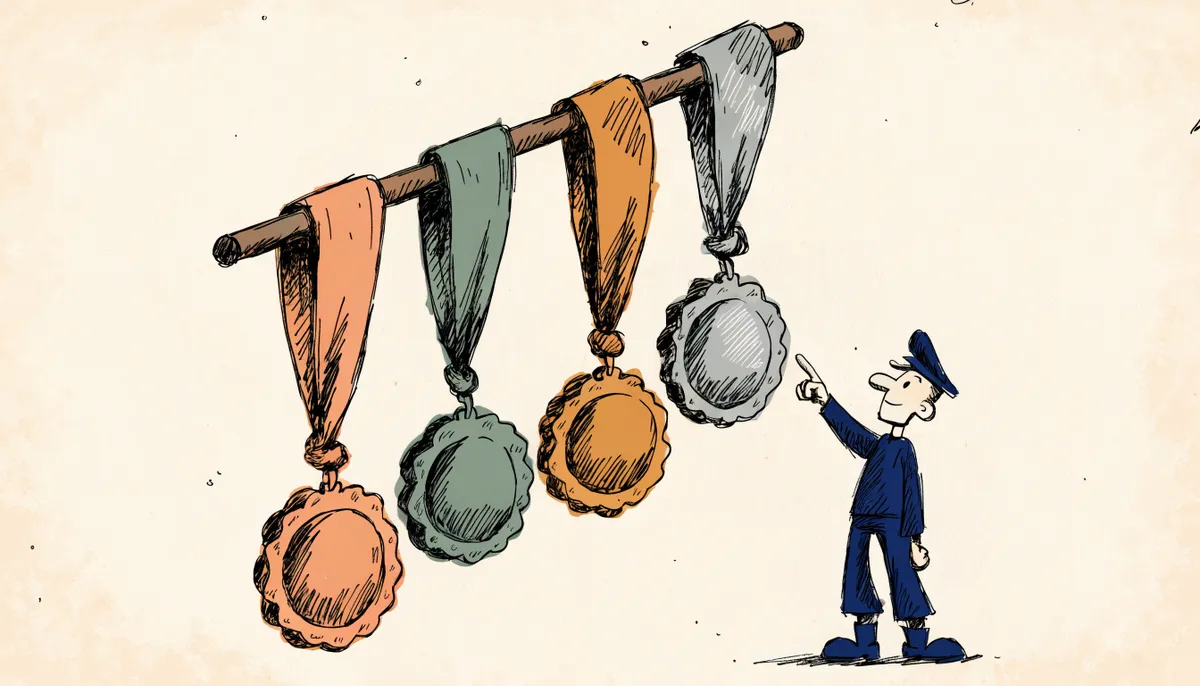
For most working-age adults and high school graduates, Gold is the practical target. It opens roughly 93% of jobs in the WorkKeys database and is widely accepted for college credit in applied-sciences programs. Platinum is impressive but rarely required.
Where to find free ACT WorkKeys practice tests
Several places offer legitimate free practice material. Some are official, some are third-party:
Start with the official ACT WorkKeys preparation page since those practice materials mirror the real test interface exactly. Third-party sites are fine for extra volume but can vary in question quality.
Applied Math: what to study and how
Applied Math is the most intimidating for many test-takers, but the content is mostly middle-school math applied to realistic work scenarios. You need to be comfortable with:
- Whole numbers, decimals, and fractions
- Percentages: sales tax, discounts, markups, commissions
- Ratios and proportions
- Unit conversions (inches to feet, ounces to pounds, gallons to liters)
- Rate problems (miles per hour, pieces per minute, cost per unit)
- Area, perimeter, and volume of basic shapes
- Averages and weighted averages
- Interpreting formulas given in the problem
Practice with a calculator, the same way you will test. For Level 5 (Gold) and above, you need to handle multi-step problems with 3-4 operations and extract the relevant numbers from wordy scenarios.
Tip: Unit errors are the single biggest source of missed points. Always write units next to every number and check they cancel properly.
Graphic Literacy: what to study and how
Graphic Literacy is about reading and interpreting visual information. You will see bar charts, line graphs, pie charts, tables, schedules, flow diagrams, floor plans, and maps. The tests gets harder at higher levels by increasing chart complexity and requiring you to combine information across multiple visuals.
Focus your prep on:
- Reading exact values from bar and line graphs (including log scales)
- Comparing quantities across categories in a chart
- Interpreting trend lines and identifying peaks, drops, or inflection points
- Navigating complex tables with nested headers or merged cells
- Following flowcharts and decision trees
- Cross-referencing two graphics to answer a single question
Tip: Before answering, actually read the title, axis labels, and legend of each graphic. Rushed test-takers skip these and waste minutes trying to figure out what the chart is showing.
Workplace Documents: what to study and how
Workplace Documents tests your ability to read and apply written workplace materials. You will see things like:
- Emails and memos between coworkers
- Employee handbooks and policy statements
- Equipment manuals and safety instructions
- Customer communications and letters
- Web-page content and intranet posts
- Government regulations and compliance notices
At lower levels, you answer questions directly pulled from the document. At higher levels you need to infer, combine information from multiple paragraphs, or apply a policy to an unusual situation.
Tip: Scan the question first, then the document. Know what you are looking for before you read. Underline or highlight the piece of text that answers each question so you can defend your choice quickly.
A simple 3-week WorkKeys study plan
If you need to pass at Silver or Gold in a few weeks, this structure works well:
- Week 1: Diagnose. Take one free full-length practice test for each of the three assessments, untimed. Grade them. Identify which one is your weakest and what level you scored at.
- Week 2: Target the weakest. Spend 4-5 study sessions (30-45 min each) drilling the weakest assessment. Pair question practice with a quick content review for the specific topic areas that tripped you up.
- Week 3: Full-length timed retest. Take a fresh full-length practice test for each assessment under real timed conditions. Compare level scores. If you are still below your target on any assessment, spend two more short sessions on it before test day.
Consistency beats marathon study. Four 40-minute sessions per week will produce a better score than one 4-hour cram.
WorkKeys vs. the college ACT
It is easy to confuse these two tests because they share the same brand. They are not the same assessment and prepping for one does not fully prep you for the other.
If you are a high school senior considering both college and immediate workforce options, taking both assessments makes sense. For college admissions, see our ACT guide and SAT vs ACT comparison. If you are focused on career readiness only, WorkKeys is the right test.
Tools and next steps
You can use our ACT score calculator if you end up taking the regular ACT as well (especially for community college or technical school applications), and our study plan guide outlines a similar weekly structure for academic prep.
For WorkKeys specifically, the best next step is:
- Register through your local workforce development board, community college, or state career center. Many offer the test for free or at reduced cost to job seekers.
- Take the official ACT sample test for each of the three assessments to see your baseline level.
- Study your weakest area first using the 3-week plan above.
- Book your test date only after you have scored at or above your target on two practice tests.
Frequently Asked Questions About the ACT WorkKeys Practice Test
What is a passing score on the ACT WorkKeys?
There is no single "passing" score. The lowest level that earns the National Career Readiness Certificate is Bronze (a level 3 on each of the three assessments). Most employers look for Silver (level 4) or Gold (level 5) at minimum. Aim for Gold if you can, since it qualifies you for about 93% of jobs in the WorkKeys database.
Is the ACT WorkKeys test hard?
The content itself is practical and grounded in real workplace situations, so it is generally easier than the college ACT. The difficulty comes from test pacing, reading dense workplace documents carefully, and multi-step applied math problems. Most adults can earn at least a Silver with a few weeks of targeted practice.
Is there a free ACT WorkKeys practice test?
Yes. ACT offers free sample questions and short practice tests on the official WorkKeys preparation page for all three core assessments. Third-party sites like Union Test Prep and Mometrix also offer free full-length practice tests with answer explanations.
How long is each WorkKeys assessment?
Each of the three core WorkKeys assessments (Applied Math, Graphic Literacy, Workplace Documents) is 55 minutes long. If you take all three in one sitting you should plan for roughly three hours of testing plus breaks and check-in time.
How many questions are on each WorkKeys test?
Applied Math has 34 items, Graphic Literacy has 38 items, and Workplace Documents has 35 items. Totals are kept deliberately modest because many items require careful reading of multi-paragraph documents or complex graphics, not just a quick calculation.
Can I use a calculator on the WorkKeys Applied Math test?
Yes. A calculator is allowed on the Applied Math assessment. The computer-based testing platform also provides an on-screen calculator, so you are never without one. Calculator policies for specialty assessments (like Applied Technology) can differ, so check with your testing center.
How do I get my WorkKeys score?
WorkKeys is computer-based and most test-takers receive an unofficial score immediately at the end of each assessment. Your official certificate (NCRC) arrives within a few weeks, mailed or issued digitally depending on your state's workforce system.
Is the NCRC worth getting if I already have a degree?
It can be, especially for roles in manufacturing, trades, healthcare support, logistics, and government where the NCRC is explicitly recognized. Many employers see a Gold or Platinum NCRC as evidence of practical job-ready skills that a degree does not always demonstrate. If you are career-changing or applying to jobs where a degree is not required, the NCRC is a cheap and fast way to add a credential.
#ACT#WorkKeys#Career Readiness



Ready to test your knowledge?
Put what you've learned into practice with our intelligent quiz system.